Unico, IDTech
Radar
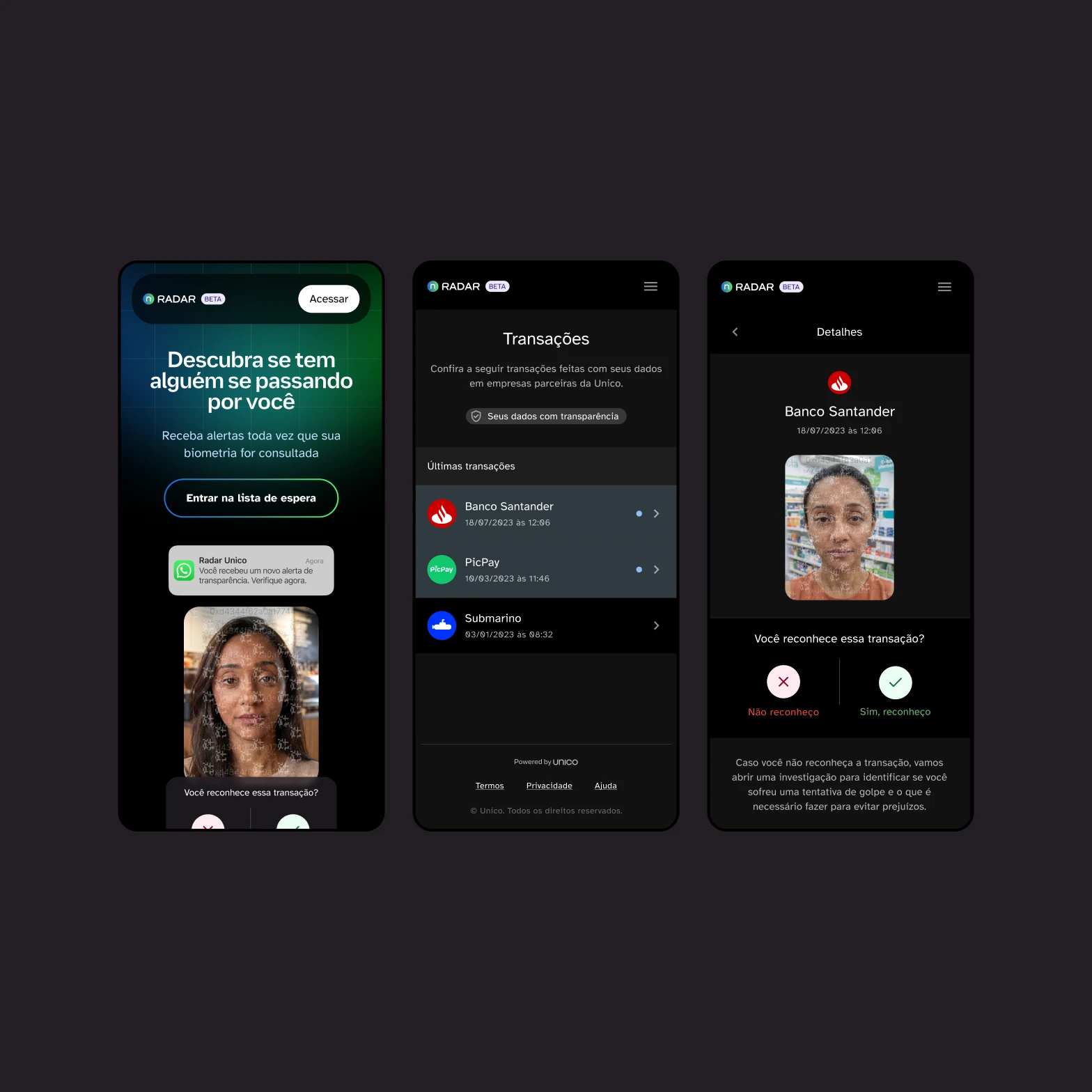
Radar Unico was a transparency initiative designed to give consumers visibility into how their biometric data was being used by Unico's partner companies. Users could access all biometric queries made against their identity and contest any transaction they didn't recognize, with a dedicated support team available to assist within 48 hours. I served as technical design lead, shaping the complete user experience from data logic to support workflows. The project was a cross-functional effort involving design, product, engineering, data, and CX teams.
The gap
Users had no visibility into how their biometric data was being processed across Unico's partner network. Identity theft was a growing concern, and there was no mechanism for consumers to verify or contest transactions made in their name. Key challenges: building trust with B2C users through transparency, designing a dispute resolution flow that balanced speed and accuracy, organizing data collection across multiple products, and aligning partner companies with a model that exposed their data queries to end users.

Approach
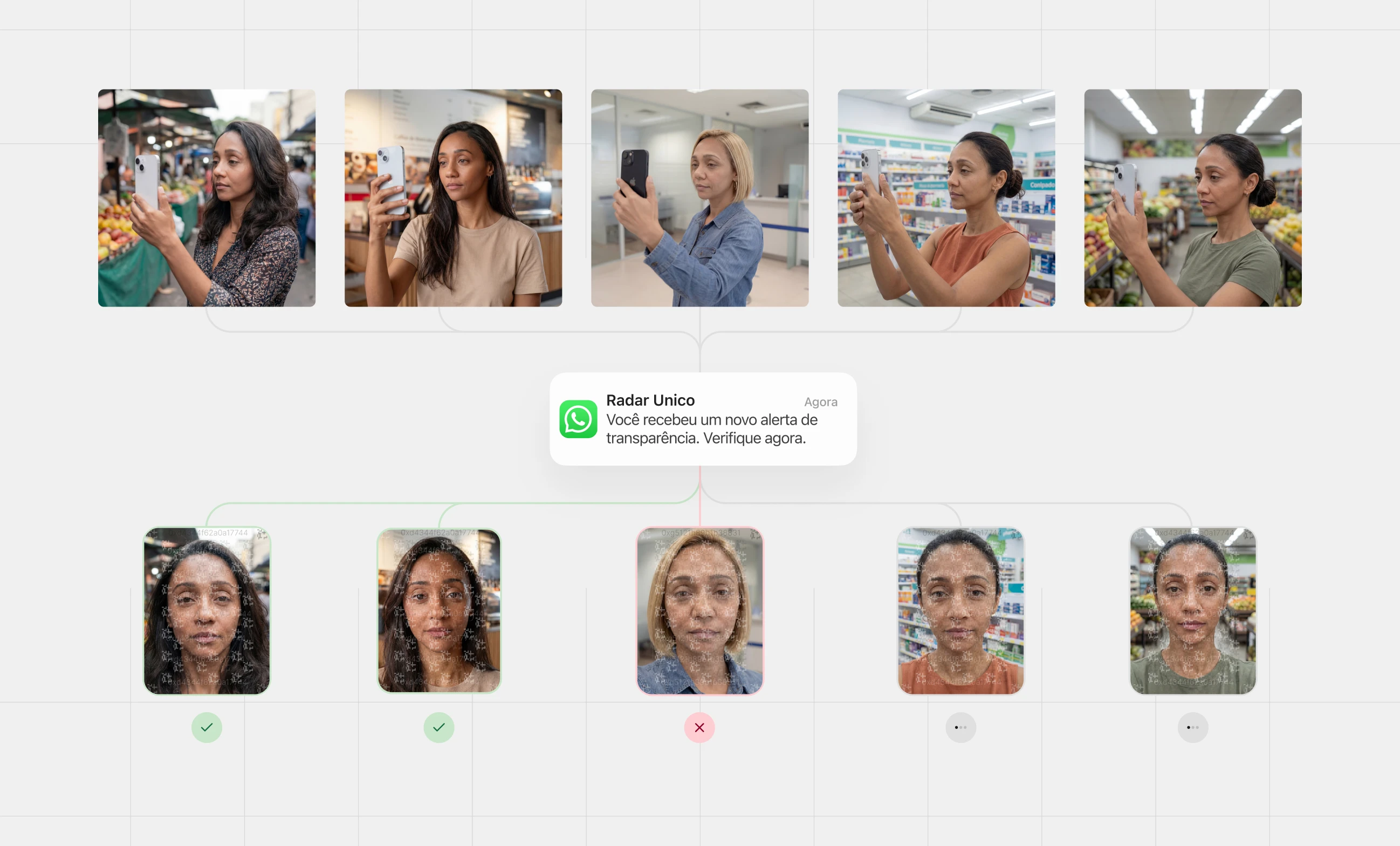
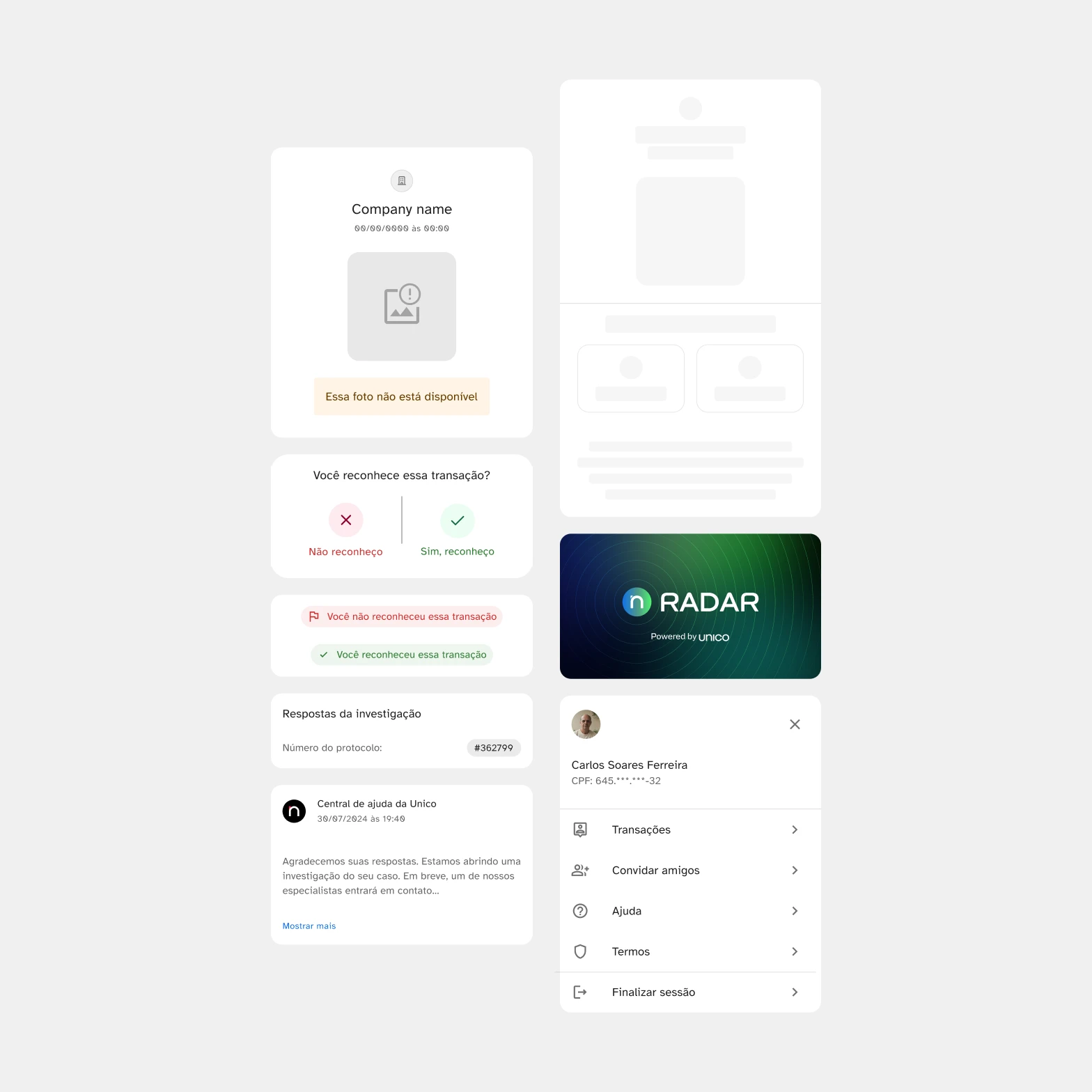
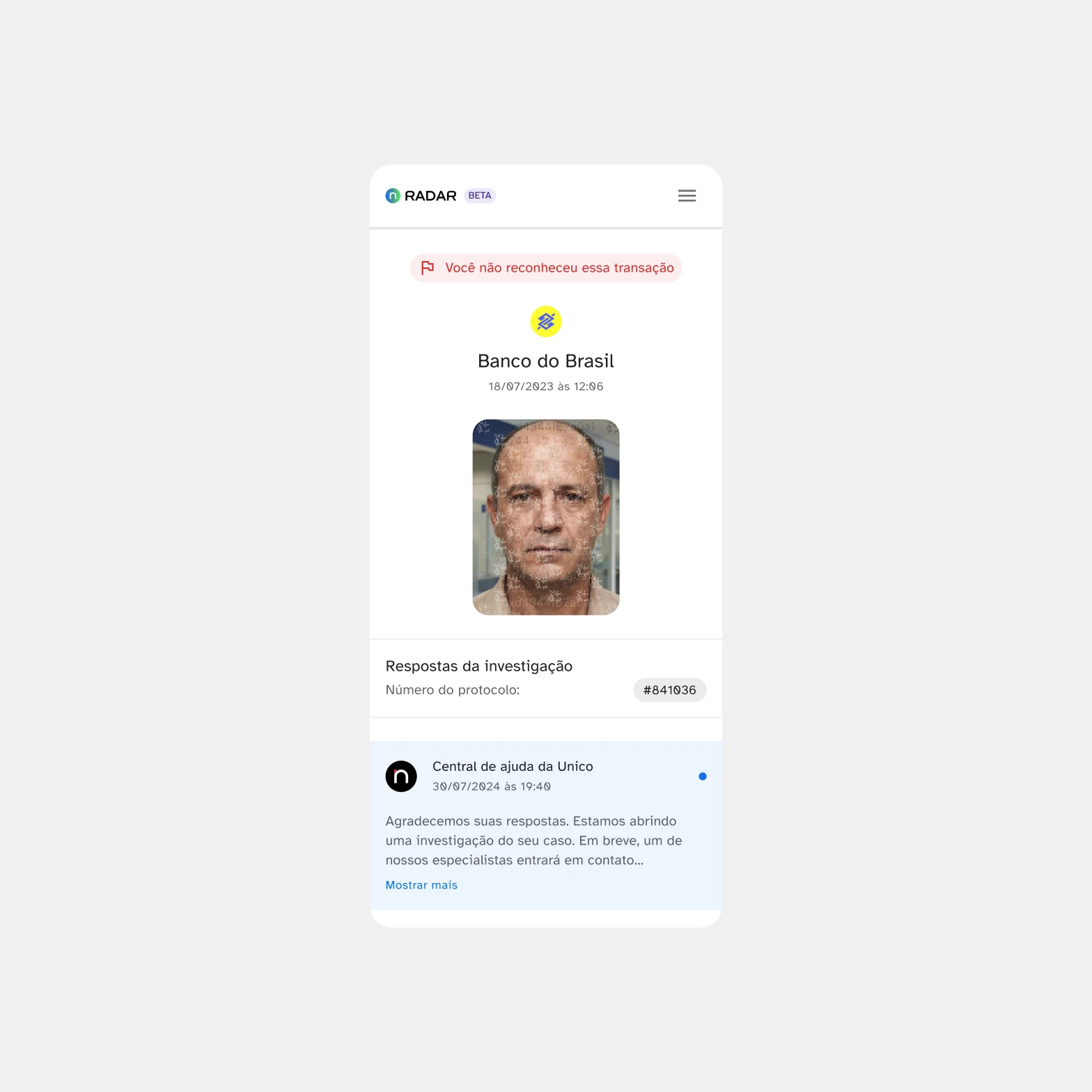
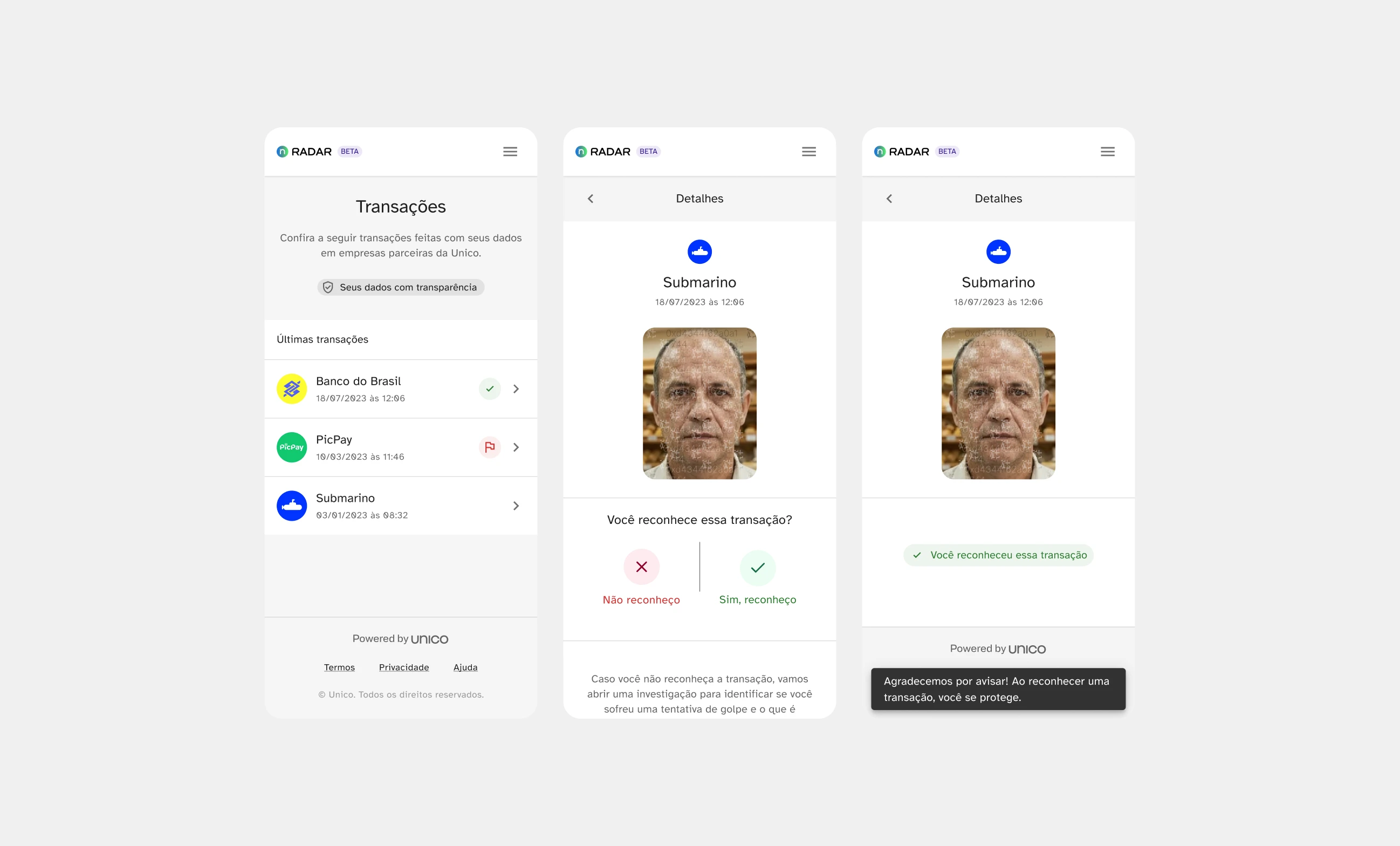
We built a transaction history feature allowing users to see all biometric queries linked to their identity across Unico ID, Unico People, and Unico Auto. Users could flag unrecognized transactions and open disputes handled by a specialist team. I led the technical design of the experience, defining which data to display, how to present query status, and how to handle dispute workflows. I collaborated with data and engineering teams to map data logic and supported the definition of operational rules for WhatsApp integration and support channels. We conducted a silent launch with approximately 200 selected users, followed by a targeted activation campaign with 40 clients across different segments, including a dedicated landing page and incentives that drove positive feedback.

Experience
Activation


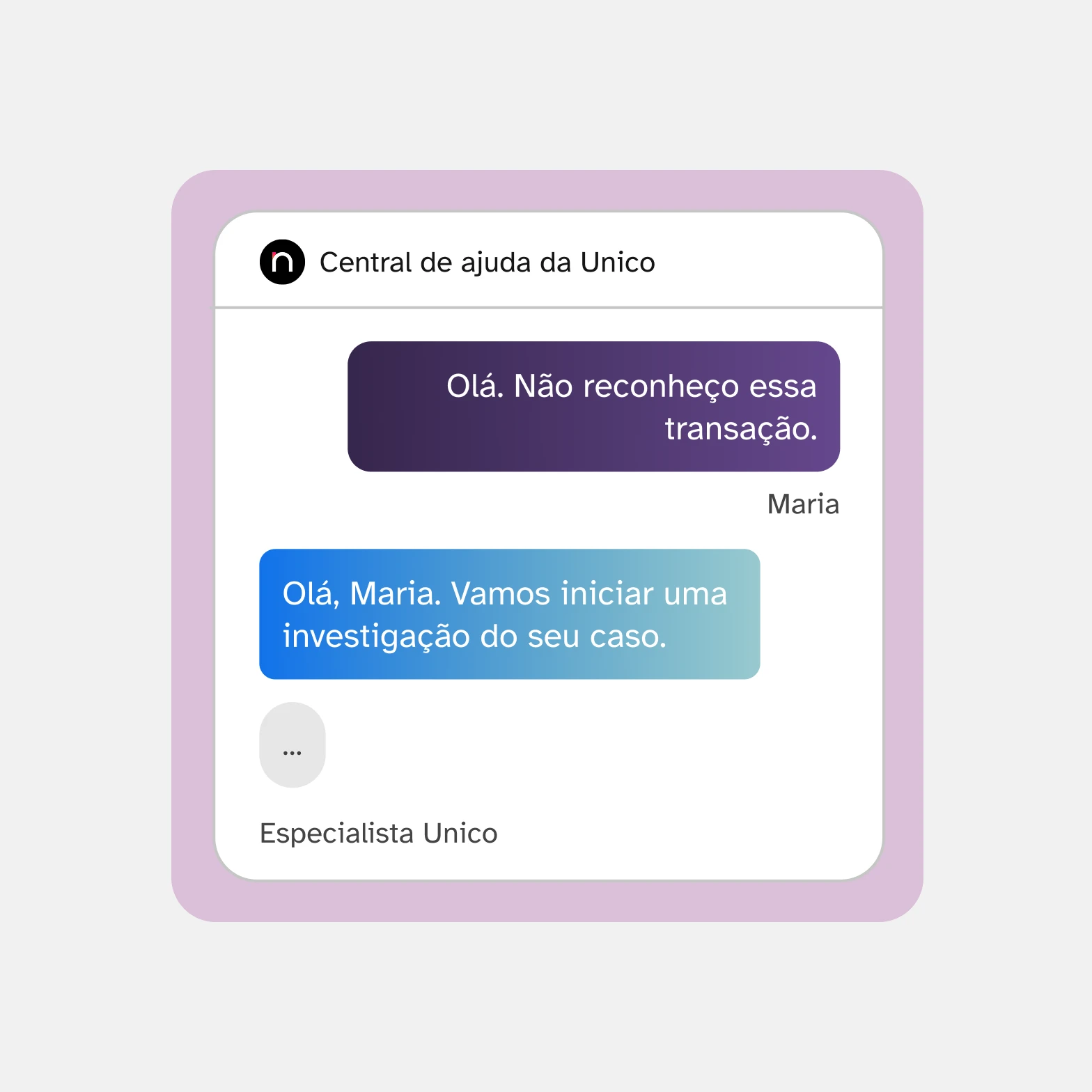
Disputes


What we learned
75% of invited users reported positive sentiment after using Radar, highlighting transparency, ease of use, trust, security, and autonomy as key values. The pilot achieved a 63.5% engagement rate among authenticated users. Dispute resolution reached 95.6% completion rate, validating the support model. Due to strategic challenges with B2B partners concerned about increased support volume from exposed queries, the initiative was discontinued before full launch. The learnings and infrastructure became foundational assets for future data transparency efforts.
Want to go deeper?
The full case study covers the research process, key metrics, and the decisions behind the design.